
A crisp, sunny morning provided the perfect conditions for a return visit to National Trust Dunsbury, where twelve members joined another fascinating wildlife walk led by Mark Larter of Natural England. Since 2018, Dunsbury Farm has been undergoing a gradual transition from intensive agriculture towards a more sustainable, wildlife-rich landscape.
The walk began with an exciting, if brief, sighting of a Common Snipe close to the reservoir. As natural food sources become less abundant in winter, species such as Goldfinch and Linnet increasingly gather in small flocks, benefiting from the safety of numbers while searching for food. Several flocks were observed around the teasel and wild bird seed mix crop, demonstrating the importance of these planted areas as a supplementary food resource.
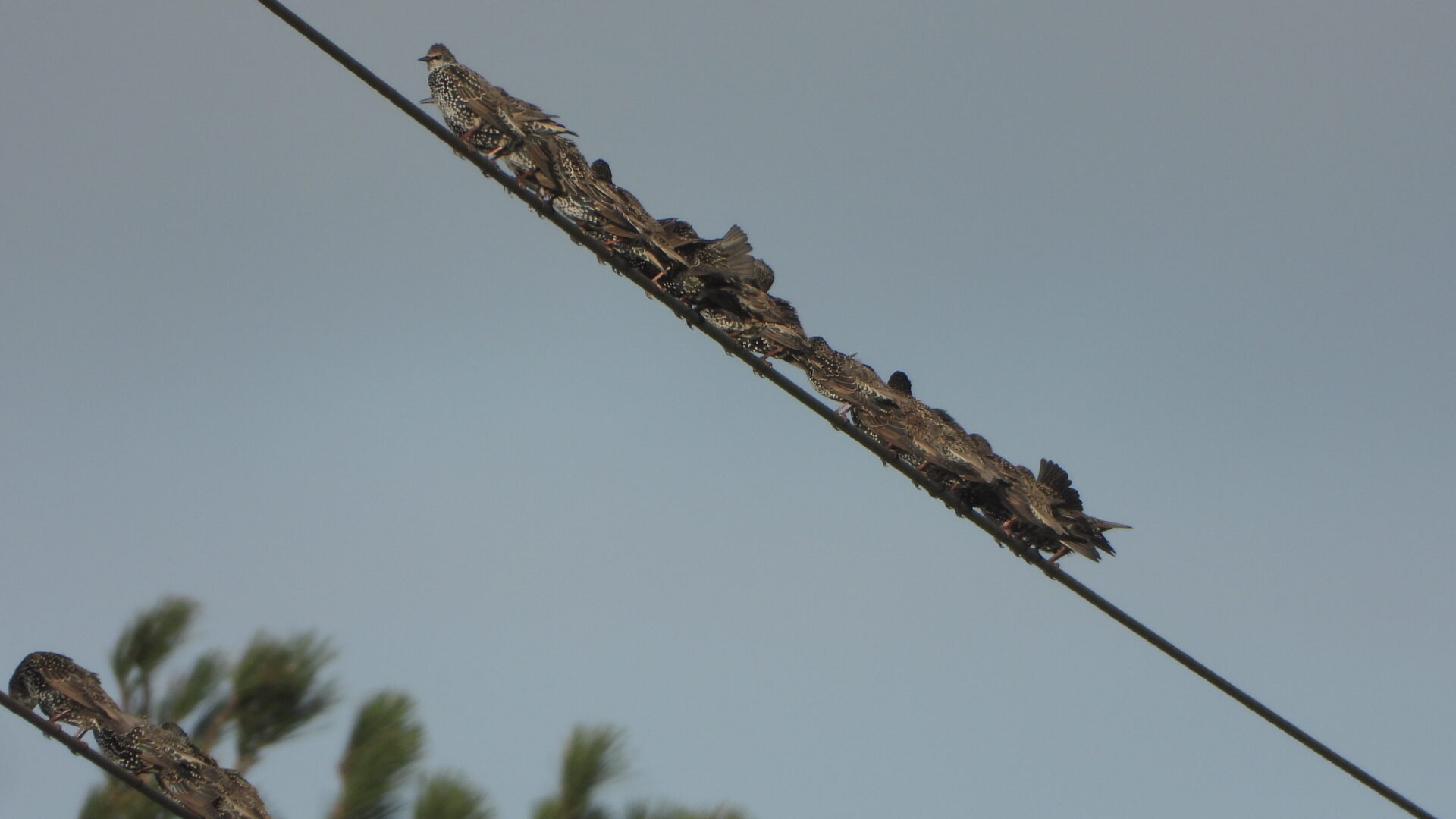 With much of the landscape now managed through cattle grazing, the shorter grassland provides suitable feeding habitat for birds searching for soil-dwelling invertebrates. Carrion Crow and Rook were seen foraging in the grazed fields, while a distant Buzzard surveyed the landscape. A large flock of Starling perched on an overhead wire, overlooking an area of short grass. This is characteristic feeding habitat for Starling, which probe the soil for insects and other invertebrates.
The arable fields provide breeding habitat for Skylark, and several birds appeared to remain on territory despite the advancing season. Meadow Pipit and Pied Wagtail were also recorded in these open areas. Meanwhile, the wildlife-rich field margins offered excellent hunting opportunities, with Kestrel making repeated appearances throughout the walk.
The increasing areas of scrub provide shelter, nesting opportunities and food resources for a variety of smaller birds including on this visit Blue Tit, Great Tit, Stonechat, Robin, Wren, Blackbird and Song Thrush. Green Woodpecker, Magpie and Herring Gull brought the day’s bird list to 21 species.
A big thank you to Mark Larter for sharing his considerable conservation knowledge and expertise. His insights prompted some excellent discussions and helped bring the relationship between land management, habitat creation and biodiversity to life. Another enjoyable and informative morning, with plenty of evidence of the wildlife benefits emerging from Dunsbury’s ongoing conservation journey.
Teresa Tearle


